
 Vietnam
 Thailand


Manchester City’s Changing Story Raises Fresh Doubts Over 115-Charge Appeal
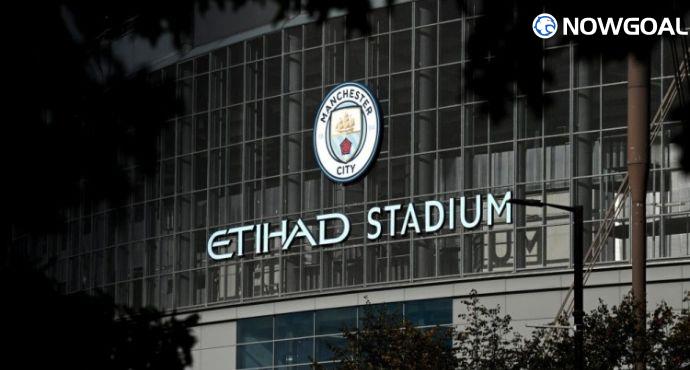
According to The Times, Manchester City’s decision to deliberately conceal key connections and later change its central explanation is highly unusual and contains clear logical inconsistencies.
An independent Premier League commission ruled that Manchester City committed multiple financial breaches between the 2009 and 2018 seasons, finding that the club used fictitious sponsorship agreements to disguise equity injections from its owner and circumvent the league’s financial regulations. Manchester City has formally appealed the ruling and plans to complete the appeal hearing by mid-December. However, evidence previously submitted by the club to UEFA appears to contradict the central arguments it is now making in its appeal, casting significant doubt over its prospects of success.
At the heart of the case are two sponsorship payments made in 2012 and 2013, totaling £30 million. Under the original agreement, the money was supposed to be paid by Etisalat, the UAE state-owned telecommunications giant. Instead, the payments were settled in two £15 million installments by a mysterious figure named Jaber Mohammed. These payments form a key part of the Premier League’s case that Manchester City fabricated sponsorship income in order to disguise owner-related funding as legitimate commercial revenue.
Records show that six years ago, during proceedings before UEFA, Manchester City gave a clear account of the identity and role of Jaber Mohammed. The club claimed that Mohammed was an ordinary commercial financial broker in the UAE, while deliberately failing to disclose his actual position at the time as director general of the Crown Prince’s Court (CPC).
Manchester City maintained at the time that the funds had been arranged by Abu Dhabi United Group (ADUG), the private entity associated with the club’s owner, Sheikh Mansour, and made no reference to any connection with the UAE government or the Crown Prince’s Court.
However, in its current appeal against the Premier League’s 115 financial charges, Manchester City has completely changed its position. The club is now arguing that the sponsorship funds originated from the UAE government, through the Crown Prince’s Court, rather than from a private capital injection by its owner. Manchester City is relying on this argument to contend that the money should not be treated as an owner equity contribution under the Premier League’s financial regulations.
The stark contrast between the two accounts has become one of the most controversial aspects of the case.
Regarding the dramatic change in Manchester City’s explanation, The Times, citing people familiar with the case, reported that the club’s decision to conceal key connections and subsequently alter its central explanation was highly unusual and exposed significant logical flaws.
The Premier League’s independent commission directly rejected Manchester City’s latest defence. It concluded that the claim that the money represented government funding was an explanation developed by the club after the fact to conceal the underlying breach involving disguised equity injections. The commission also noted that Manchester City had never raised this explanation during multiple previous inquiries by third parties and only introduced it at a late stage of the proceedings.
Significantly, an unpublished UEFA ruling from 2020 had already cast doubt on Manchester City’s explanation. UEFA’s Financial Control Body questioned why Etisalat, a major state-owned company, and ADUG, the relevant investment vehicle, would need to rely on an ordinary financial broker to arrange such payments. According to UEFA, Manchester City’s explanation did not make commercial sense.
UEFA subsequently imposed a two-year ban from European competition on Manchester City. However, the Court of Arbitration for Sport (CAS) later overturned the punishment because the relevant payment allegations had fallen outside the applicable limitation period. CAS did not establish that Manchester City had committed no wrongdoing.
The difference between the limitation rules has become crucial to the current Premier League case. Unlike UEFA proceedings, Premier League financial cases are not subject to the same statute of limitations. As a result, the alleged £30 million of irregular payments from 2012 and 2013 remains within the scope of the Premier League’s investigation and disciplinary process.
Under Premier League regulations, direct equity injections from club owners are subject to strict limits, whereas legitimate commercial sponsorship revenue is not subject to the same restrictions. Manchester City is therefore alleged to have attempted to disguise private or related-party funding as legitimate sponsorship income, allowing it to circumvent the league’s financial controls.
Manchester City continues to deny all 115 financial charges, arguing that the original commission ruling contains errors of both fact and law. The club is pushing ahead with its appeal process.
However, the apparent contradictions between the evidence and explanations presented at different stages of the case have significantly weakened the credibility of Manchester City’s defence. Many observers believe that this key inconsistency could prove decisive and potentially contribute to the failure of the club’s appeal.
The outcome of the appeal hearing and the final decision on any punishment could become one of the most significant rulings of the Premier League season and one of the most closely watched cases in world football.
The Most Popular
-
 Port FC vs Persib: A Battle of Asian Ambition
 -
 Persik vs Madura United: Can the Hosts Stop the Winning Run?
 -
 Messi Bids Farewell to Argentina as Ronaldo Pays Tribute: “Your Story Will Live On Forever”
 -
 Cristiano Ronaldo Breaks Silence on Dispute With Jorge Jesus
 -
 Lyon Eye Top Spot as Struggling Lens Stand in Their Way
 -
 Norway Football Federation Takes Gianni Infantino Dispute to FIFA Ethics and Governance Bodies
 Telegram
 Facebook
 X
X